The network radiates from the capital, so cross-country journeys are slow and expensive in a country that built the fastest trains in Europe.
Lyon to Bordeaux is harder than either to Paris
Paris built the rails and kept them
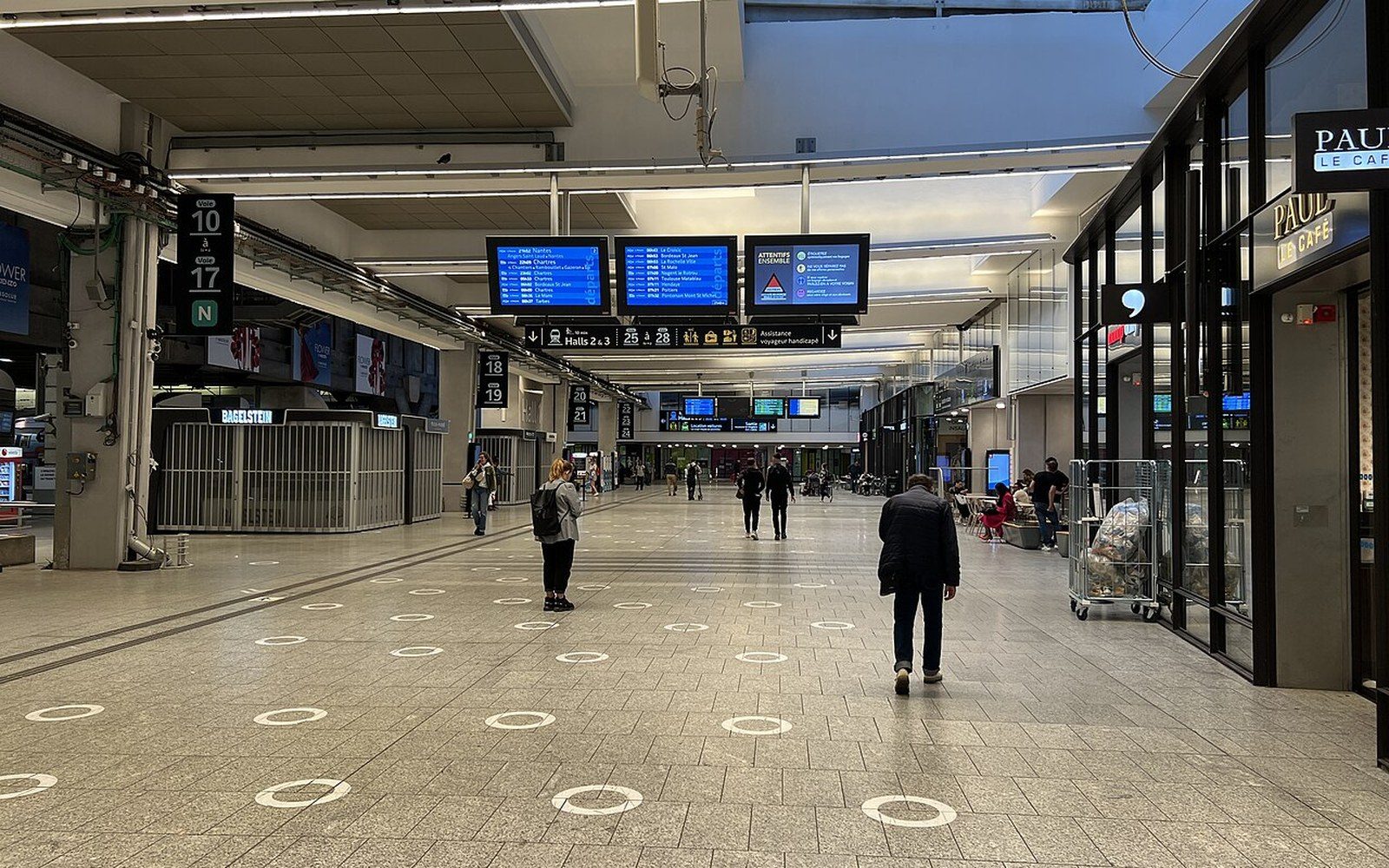
France did not plan its railway network to serve France. It planned it to serve Paris, and the difference is one of the more quietly disorienting facts about life here. The first major lines, authorised in the 1840s, were drawn as spokes from the capital: north to Lille and Calais, south to Lyon and Marseille, west to Bordeaux and Brest, east to Strasbourg. The logic was administrative as much as commercial — France had already organised its roads on the same model, radiating from the capital in routes nationales numbered outward from the centre. The railway repeated the pattern, and the two centuries since have not fundamentally unwound it.
The result is a network that SNCF's own maps make obvious once you know to look for it. The high-speed TGV lines — the lignes à grande vitesse — connect Paris to Lyon, Paris to Marseille, Paris to Bordeaux, Paris to Lille, Paris to Strasbourg. France's LGV network is genuinely remarkable: the line south from Paris reaches Lyon in under two hours, and Marseille in three. But these are radial achievements. The connections between those endpoints are a different matter.
What the map does not show you
Take Lyon to Bordeaux, a journey of roughly 550 kilometres between France's second and sixth largest cities. These are not obscure places. Lyon is the country's gastronomic and industrial heart; Bordeaux is a major port city and a European cultural capital. By high-speed rail, neither exists for the other — there is no direct TGV. A traveller heading from Lyon to Bordeaux must either change trains in Paris, adding a detour of four hundred kilometres north and consuming the better part of a day, or take a slower intercity service through Clermont-Ferrand and across the Massif Central, which is scenic in the way that things are scenic when they take four to five hours and involve a topography that was never designed to be crossed quickly.
The Paris change is the usual answer, and it has an additional complication: Lyon's TGVs arrive at the Gare de Lyon, on the Right Bank, while trains to Bordeaux depart from the Gare Montparnasse, on the Left Bank. The connection requires crossing the city, by taxi or RER, with luggage. The journey, door to door, routinely stretches beyond five hours. A flight between the two cities, which is almost certainly worse in every other respect, takes around an hour and fifteen minutes in the air, and the existence of that option is the most honest commentary on what the rail network can offer for this corridor.
Lyon to Strasbourg is similar: two cities in the same broad arc of eastern France, both well-served from Paris, poorly served from each other. Marseille to Bordeaux, Toulouse to Lille, Nantes to Lyon — all of these follow the same pattern. Paris absorbs every spoke; the spokes do not connect at the rim.
Why this is expensive, not just slow
Rail pricing in France follows supply and demand through the Ouigo and TGV inoui yield-management systems, which means that heavily used routes — Paris to Lyon, Paris to Bordeaux — have cheap early-booking fares that pull prices down. Cross-country routes, where trains are less frequent and alternatives thinner, produce a different pricing environment. You cannot benefit from a full competitive market on a route where there is, effectively, one practical option. The traveller choosing between Lyon and Bordeaux by train has little to compare, and the fare reflects it.

The opening of the LGV Sud Europe Atlantique, the high-speed extension from Tours to Bordeaux completed in 2017, cut Paris–Bordeaux to around two hours. It did not shorten Lyon–Bordeaux by a single minute. Infrastructure investment follows the spoke model even when it modernises it.
The TER is not the answer here
The regional trains — the TER, or trains express régionaux — are the bones of local connectivity, and they carry genuine daily traffic between towns that the TGV skips. But TER services are organised and funded by the regions, and the administrative regions of France do not share borders in ways that help with cross-country movement. A TER managed by Auvergne-Rhône-Alpes stops at the edge of Auvergne-Rhône-Alpes. Coordination between regional operators exists but is not seamless, and the TER system was never designed for long cross-country legs anyway. It is the capillary network, invaluable for what it does, but not a substitute for the intercity arteries that are missing.
What exists and where things are changing
There are cross-country exceptions. The Intercités network covers routes that the TGV ignores — Bordeaux to Lyon via Clermont-Ferrand is one of them — and these trains run on infrastructure that sometimes dates to the mid-twentieth century, with speeds to match. They are not fast, but they run, and they carry a daily reality of French movement that the high-speed network is not set up to see.
There is also a broader political conversation, slow-moving and ongoing, about whether France should invest in a proper orbital high-speed link — a route that would allow Lyon to connect to Bordeaux, or Toulouse to Strasbourg, without the Paris detour. The SNCF and successive transport ministries have produced studies; the European Commission has funded planning work under its Trans-European Transport Network framework, which explicitly names orbital connectivity as a priority for the continent. The political and financial commitment to actually build such a link in France has not materialised in the same way that the Paris-centred spokes were built.
What this means on the ground
For someone who has just moved to Lyon and discovers that visiting a friend in Bordeaux is a half-day expedition requiring a change in Paris, the lesson is not that France has failed to build trains. France has built some of the fastest and most punctual trains in Europe and is genuinely proud of them. The lesson is about which France those trains were built to serve.
The country's administrative and economic life has always centred on Paris — the préfecture system, the grandes écoles, the national broadcasters, the company headquarters — and the railway is the steel expression of that same impulse. When you travel between two French cities and find that the fastest route goes five hundred kilometres north and then five hundred kilometres south again, you are not experiencing a planning failure. You are experiencing a planning success, in the only direction France originally planned for.